Description
About BPC-157
Unauthorized health products have not been evaluated or approved by Health Canada. As a result, their safety, effectiveness, and quality are unknown, and they may pose serious health risks. These products may contain dangerous ingredients — including prescription or controlled substances — as well as additives or contaminants that may not appear on the label. The amount of active ingredients may also differ from what is claimed, and they can interact with medications or foods.
Prescription drugs are intended to treat specific medical conditions and can cause serious side effects, which is why they should only be used under the supervision of a licensed health care professional. In Canada, prescription drugs can only be legally sold to consumers with a valid prescription
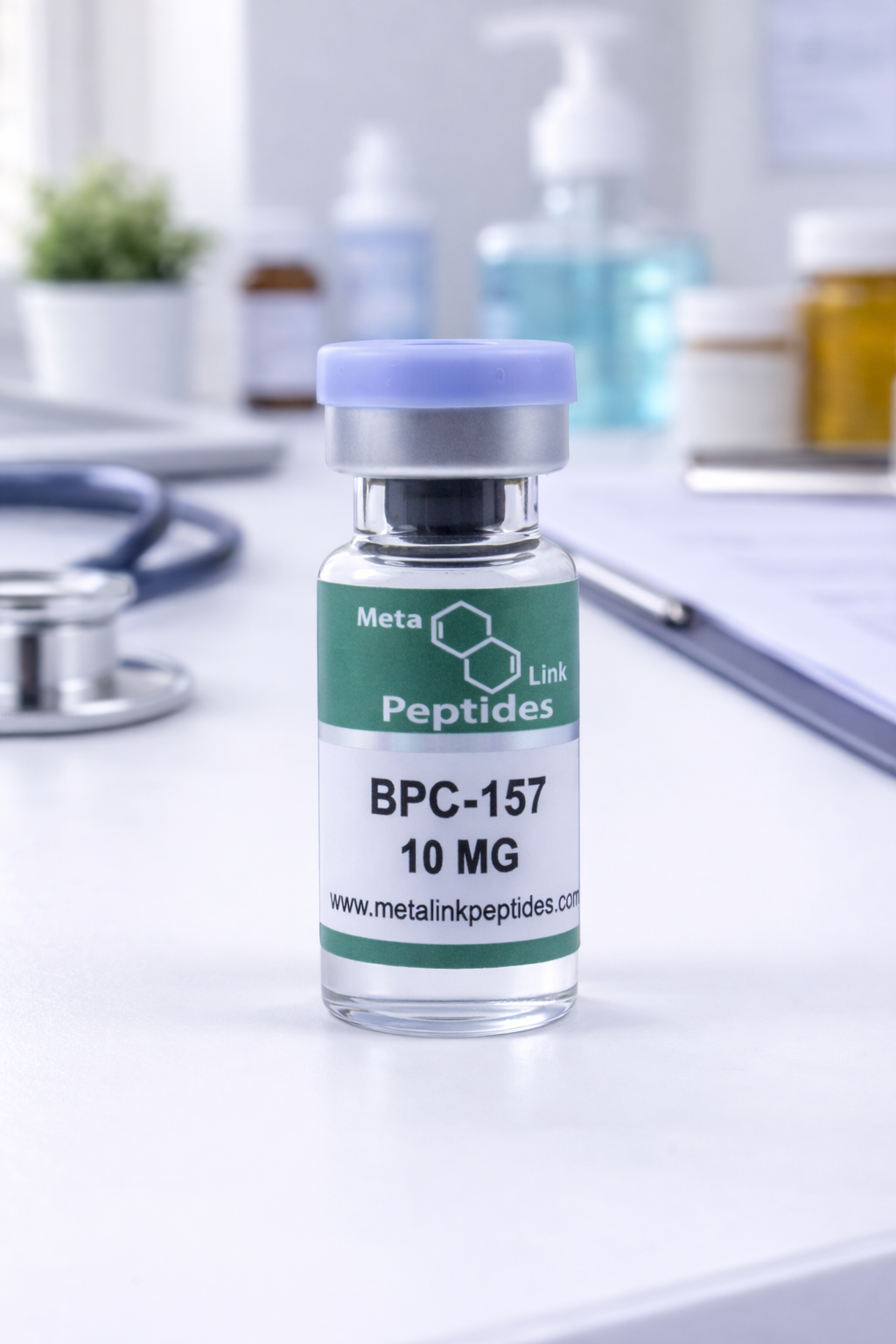
BPC-157 is a well-known healing peptide that has attracted attention in peptide research for its potential roles in tissue repair, reducing inflammation, and supporting gut health. Derived from a protective protein found in the stomach, this peptide is often studied for its impact on muscle recovery, tendon healing, and ligament repair.
Researchers frequently explore BPC-157 for its ability to support cellular regeneration and improved blood vessel formation, which are essential processes for healing damaged tissue. This makes it one of the most popular peptides studied for sports recovery and injury repair.
In addition to musculoskeletal research, BPC-157 is also investigated for its possible role in digestive health and gut tissue repair, making it a versatile compound in peptide studies.
Due to its broad research potential, BPC-157 remains one of the most searched healing peptides for recovery and regeneration in modern peptide science.
❓ What are peptides?
Peptides are short chains of amino acids that are studied in laboratory environments to understand biological processes such as cellular signalling and molecular interactions.
❓ What are research peptides used for?
Scientific and laboratory settings use peptides to explore how biological systems respond under controlled experimental conditions.
❓ How are research peptides stored?
Research peptides are typically stored in controlled environments, often at low temperatures, to maintain stability and integrity.

Reviews
There are no reviews yet.